AAF Player
Open the turnover.
Hear it. Check sync.
A turnover lands and the usual way to find out what is actually in it is to import the whole thing into Pro Tools. AAF Player opens the AAF on its own, draws the timeline, and plays it back, with the reference picture in sync if you want it. Nothing is imported and nothing is changed.
$80 once. No subscription, no account, and no internet connection required: not to activate, not to keep working. The 14-day trial is the complete app, so you can be sure before you pay. If it is not for you, there is a no-hassle 14-day refund policy.
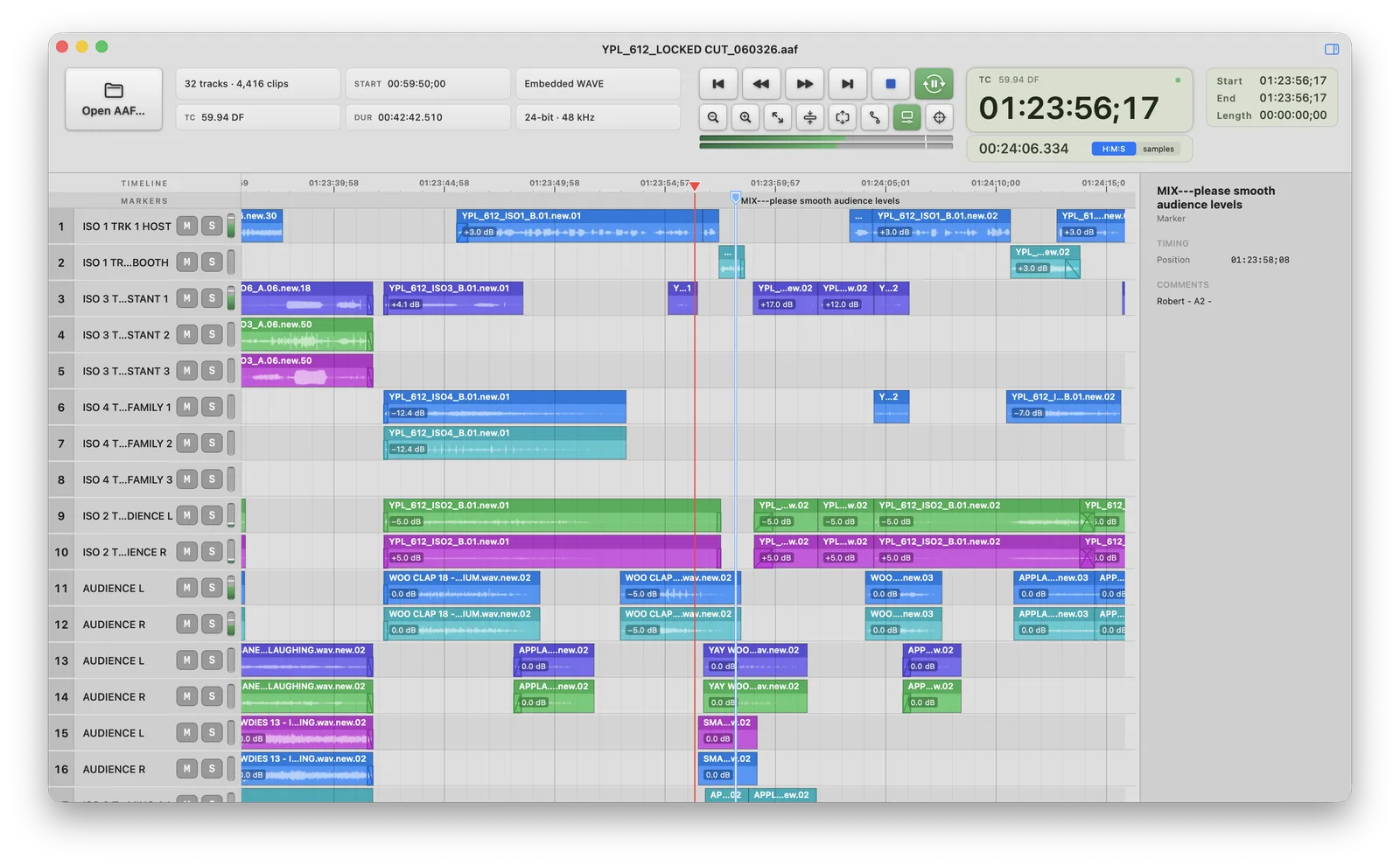
Drop an AAF on the window and it opens in place. You get track lanes, clips, waveforms, fades and crossfades, clip gain and automation drawn over the audio, markers, and timecode. Zoom and scroll, click anywhere on the timeline, press space, and it plays from there.
The whole session is parsed in-process by the same native-Swift engine that powers AAF Look, so opening a turnover is not a job you start and walk away from.
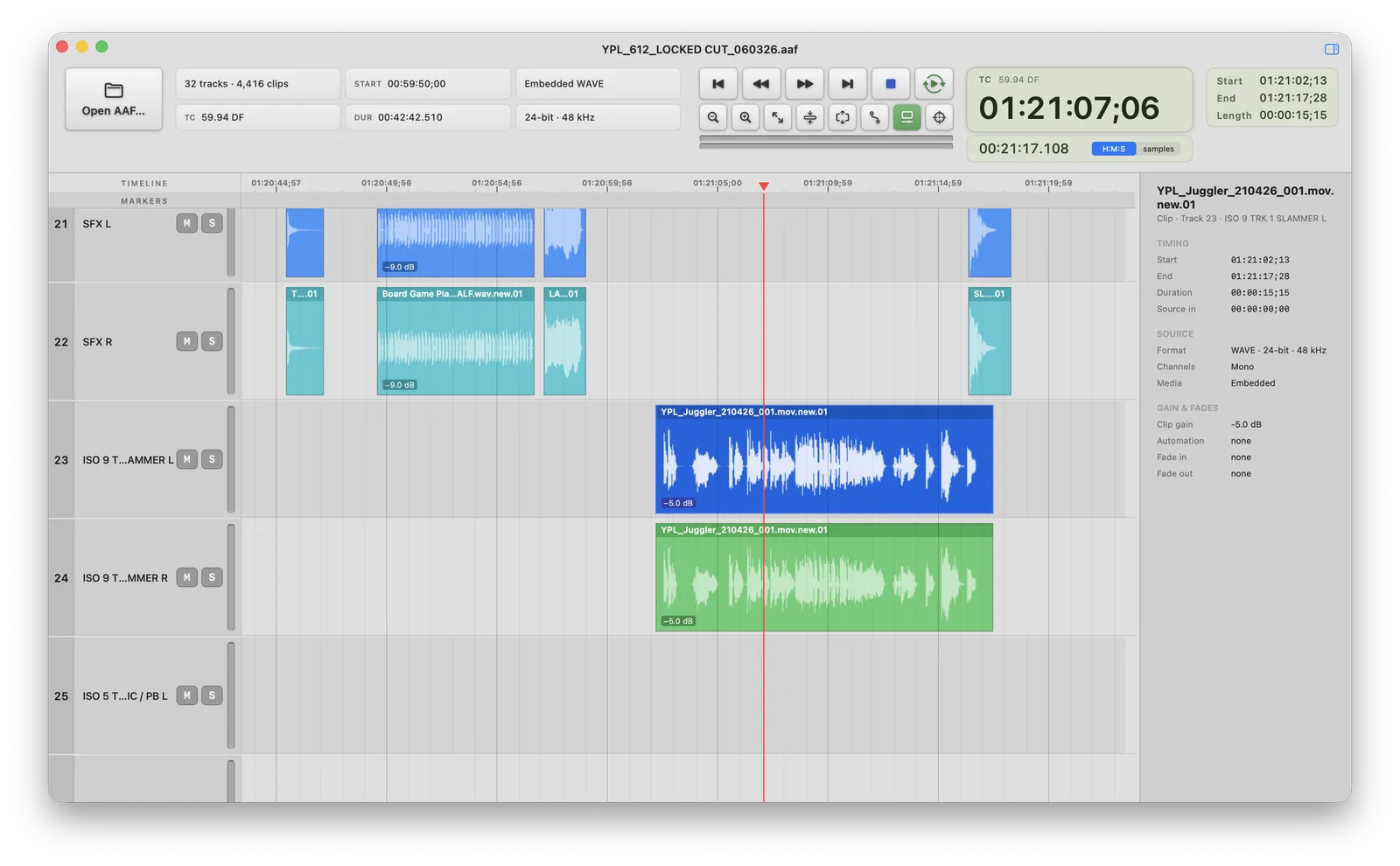
A real turnover, not a staged one: 32 tracks, 4,416 clips, every bit of audio embedded in the AAF. Waveforms draw across the whole session, then it plays. The clip on this page carries no audio.
Watch the full two-minute demo
Two minutes, start to finish, with no narration and no audio track: opening the turnover, playing it, zooming in and out, inspecting individual clips, and reading the mixer's markers.

- PlaybackCache-backed engine
- MonitoringPer-track mute, solo, pan
- MeteringPer track + stereo master
- EngineNative Swift
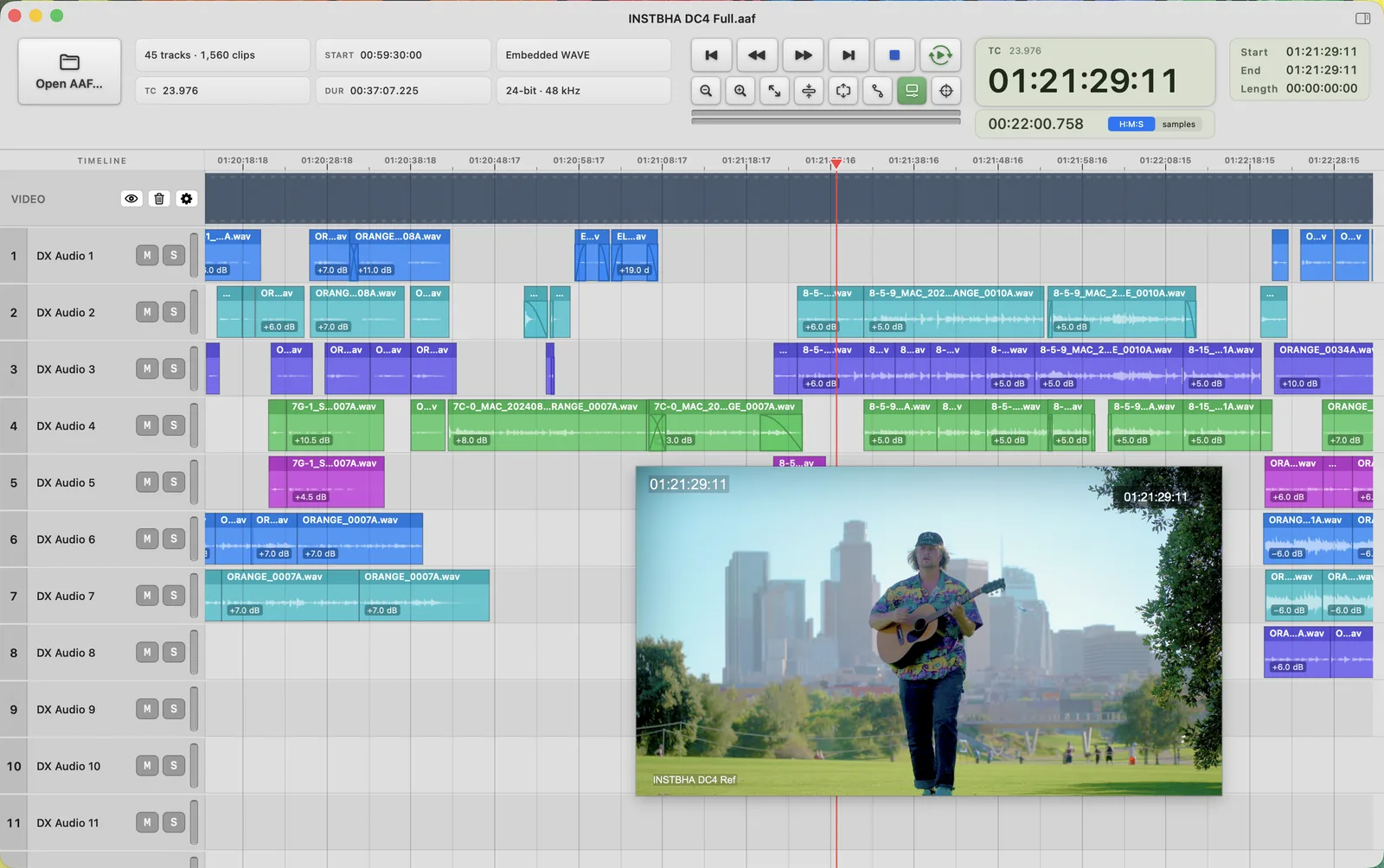
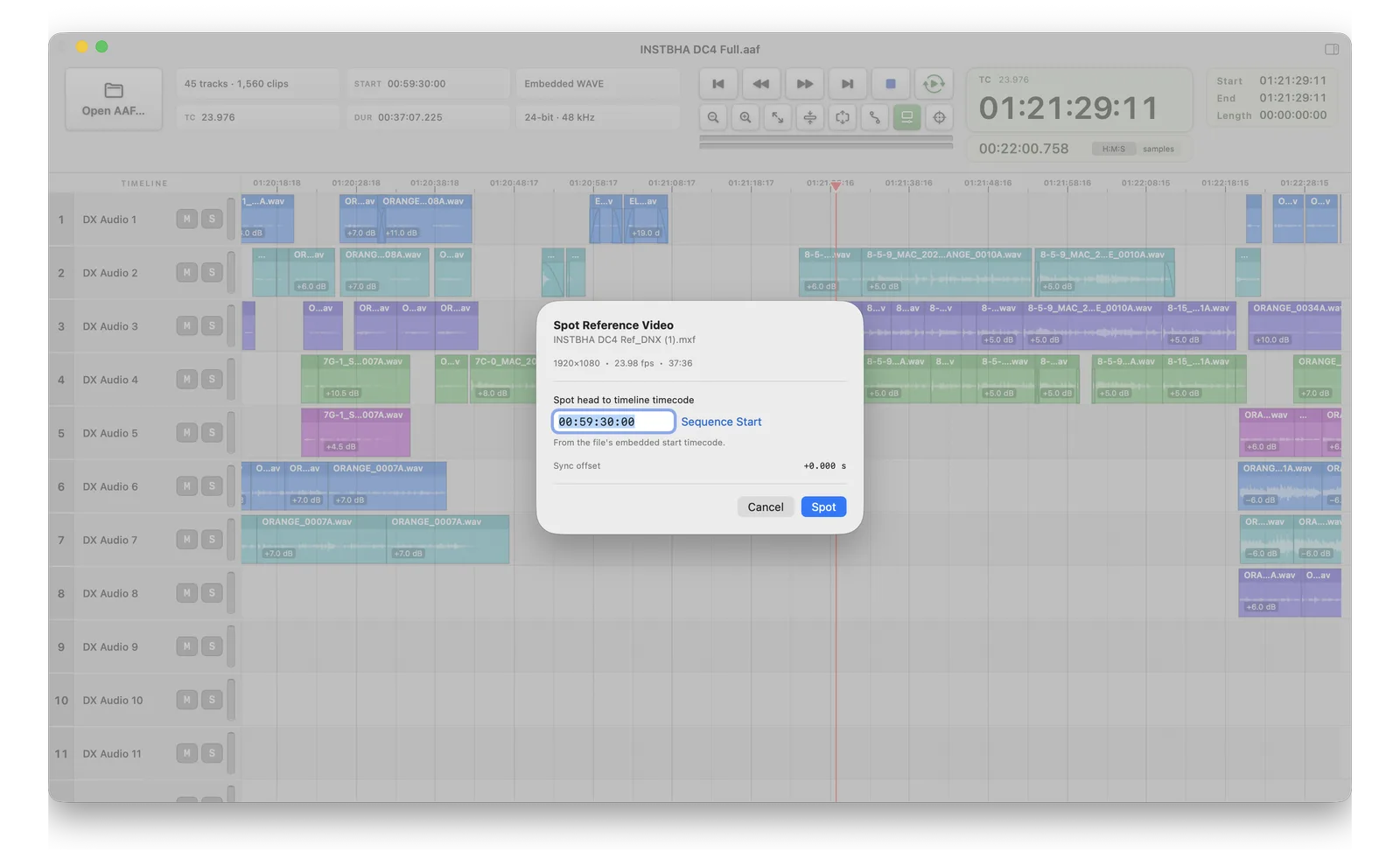
Load the reference picture and it follows the transport. Play, shuttle and frame-step all stay locked, and a video lane on the timeline shows where the picture sits against the audio.
- Spotting is automatic when the file carries a start timecode. When it does not, type the timecode where the first frame belongs.
- A configurable timecode burn-in can be drawn over the picture, so what you are looking at and what you are hearing are checkable against each other.
- If the sync feels a frame off, nudge the picture a frame at a time and reset when you are happy.
- Plays the formats post actually ships: ProRes, DNxHD, DNxHR, AVC-Intra, H.264 and HEVC.
- The decoder runs in a separate process, so a problem with the picture can never take down audio playback. If it does fail it restarts and re-syncs itself.
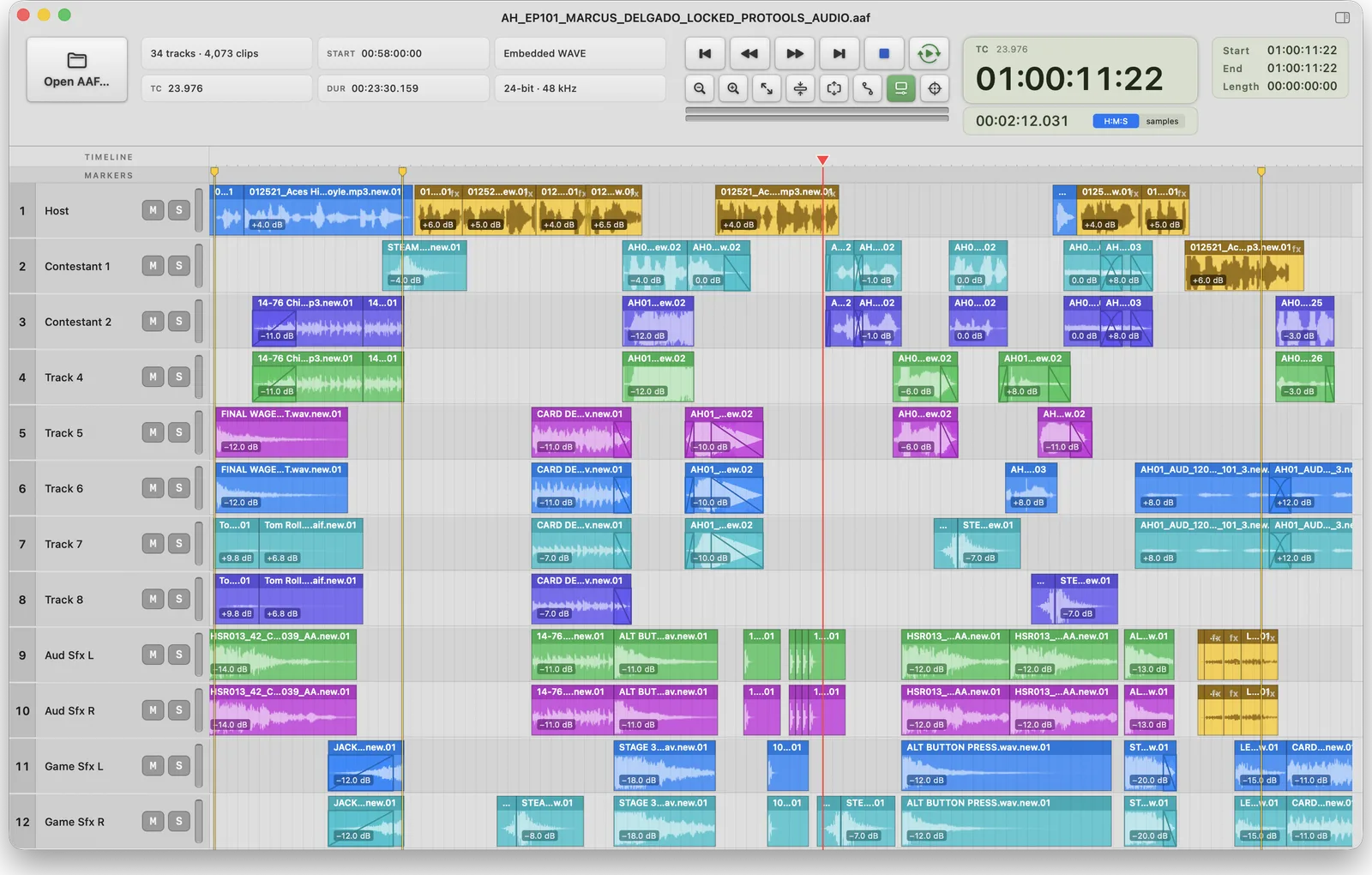
Turnovers arrive in more shapes than anyone would like. AAF Player reads the common ones without asking you to relink anything first.
- Embedded essence: PCM, WAVE and AIFC carried inside the AAF itself.
- External media: linked WAV and AIFF, and MXF Op-Atom as it comes out of Media Composer.
- Per-clip fades and crossfades, plus static and keyframed clip gain, applied on playback.
- Clips carrying a rendered effect are drawn in gold, with the rendered audio’s own waveform, so processed material is visible before you play anything, even with a whole reel on screen.
- Where a clip carries a rendered effect, you can switch between the rendered audio and the dry source and hear the difference immediately. That answers the usual question: is the odd sound the edit, or the effect?
- It never writes AAF Player does not modify the AAF or its media. There is no save, no export, and no repair. It reads a turnover and makes sound.
- Works offline The app and its license run fully offline, forever. It only touches the network if you choose Check for Updates yourself, and even then it sends nothing about you.
- No account Nothing to sign up for. Your license is a small signed file we email you.
- Not an editor No trimming, no dragging clips, no conforming. If you need to change the session, that still happens in your DAW. This is the step before that.
- Does it change my AAF?
- No. It is strictly read-only: it opens the file, reads it, and plays it. Your turnover and its media are exactly as they were.
- Do I still need Pro Tools?
- Yes, for the actual work. AAF Player is for the moment before that, when you want to know what you have been sent without spending an import on finding out.
- What if the media is not embedded?
- Linked WAV, AIFF and MXF Op-Atom play from where they sit. There is no relink interface, so if a file is genuinely missing, AAF Player will tell you rather than pretend.
- Does it play the picture too?
- It plays a reference video you point it at, kept in sync with the audio and spottable by timecode. It does not extract picture from the AAF.
- How does the license work?
- You get a small signed file by email. Double-click it, or choose Enter License from the AAF Player menu, the one next to the Apple menu. It works offline forever, including on an air-gapped machine, on the Macs you personally use.
- Is this the same engine as AAF Look?
- The AAF reading is, yes. If AAF Look opens your turnover, this will too.
- Something is wrong, who do I ask?
- The person who built it answers: support@parkstreetpostsoftware.com.